Researchers: Much of Household Recycling Is a Waste
We are urged to sort ever greater portions of our household waste to save the environment. But much of source-separated recycling costs more than it’s worth — and can even harm the environment. That’s the claim…
- We are urged to sort ever greater portions of our household waste to save the environment.
- But much of source-separated recycling costs more than it’s worth — and can even harm the environment.
- That’s the claim made by Danish researcher and climate commentator Bjorn Lomborg, who argues that politicians have made recycling an end in itself instead of asking whether the benefits truly outweigh the costs.
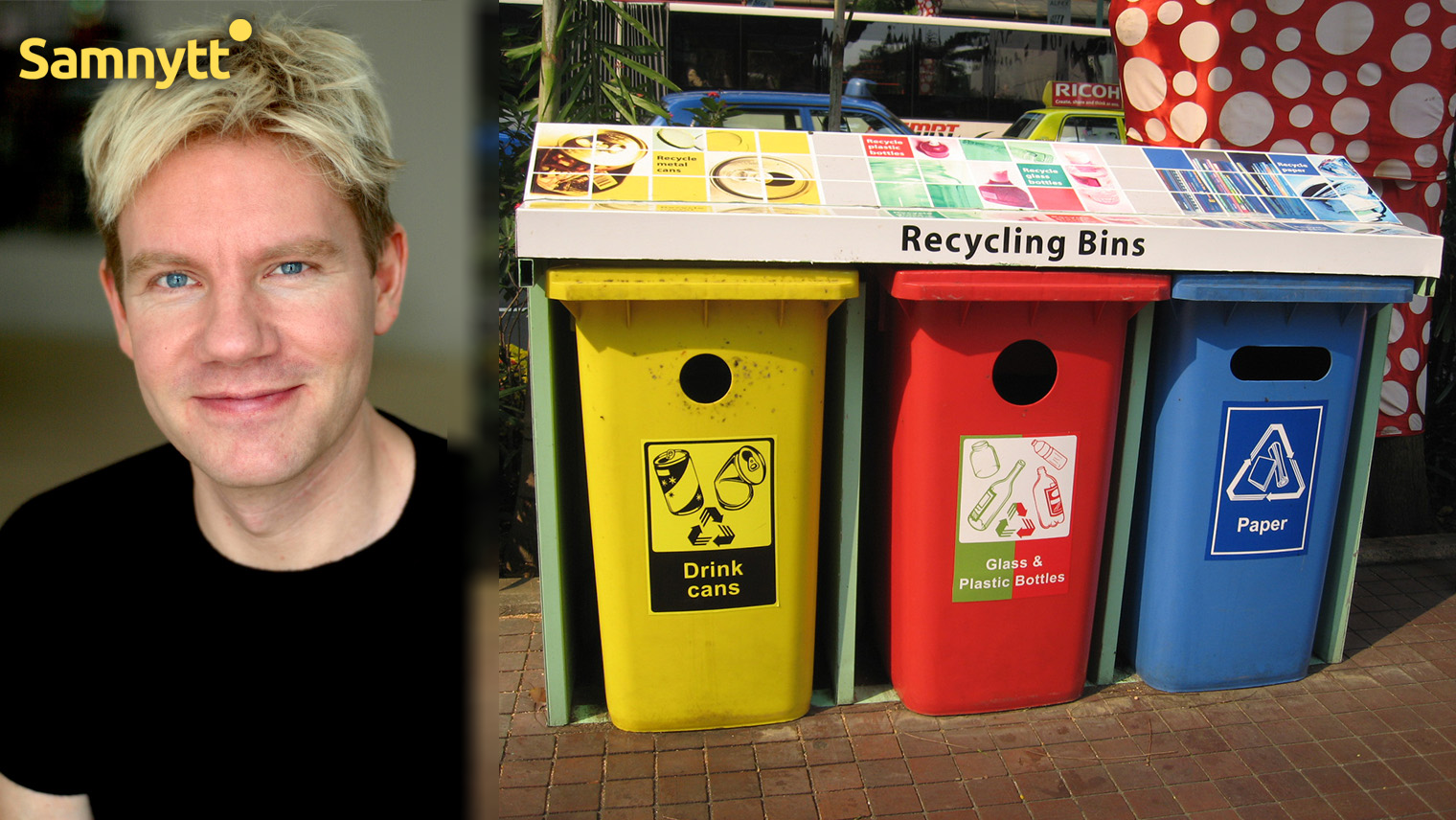
We are urged to sort ever greater portions of our household waste to save the environment. But much of source-separated recycling costs more than it’s worth — and can even harm the environment. That’s the claim made by Danish researcher and climate commentator Bjorn Lomborg, who argues that politicians have made recycling an end in itself instead of asking whether the benefits truly outweigh the costs.
Lomborg was recently reminded of how complicated something as simple as throwing away trash has become when he tried to toss a popsicle wrapper in Copenhagen. Denmark has ten official waste sorting categories, and choosing the correct bin can feel like taking a minor bureaucratic exam.
In an op-ed in the Wall Street Journal, titled Most Recycling Is a Waste, Lomborg questions the near-unquestioned idea that more recycling is always better. He writes that recycling policies in many Western countries have gone far beyond what can be justified by economic and environmental factors.
“We’re Not Running Out of Trees”
According to Lomborg, modern interest in recycling surged in the 1970s, driven by fears that the Earth’s natural resources were running out. But he believes that argument has largely lost its relevance. Paper, for example, is the most recycled material in households, despite the fact that the world is not generally facing a tree shortage.
Instead, environmental arguments have become dominant. And there are certainly good reasons to recycle some materials. Recycling plastic can reduce the need for oil, and recycling metals is often both economically profitable and conserves resources.
Other materials are much less convincing. Glass is heavy and must be collected, transported, cleaned, and remelted, which all requires both energy and money.
“Almost anything can be recycled if you spend enough money and energy on it. But are the benefits worth the cost?” Lomborg asks.
He points out that valuable materials were being recycled long before governments imposed comprehensive sorting requirements. A hundred years ago, around 30 percent of America’s copper supply came from scrap, compared to a current global recycling rate of about 32 percent. Iron, steel, and construction waste are also widely recycled, simply because it’s profitable.
Recycling Has Become an End in Itself
According to Lomborg, the problem arises when politicians try to force recycling even for materials where collection and processing cost more than the recycled material is worth. In some cases, environmental benefits may justify the difference. But somewhere along the way, politicians stopped weighing costs against benefits and started viewing the recycling rate itself as a metric of success.
The EU, for example, has set a range of recycling targets — from 50 to 90 percent — for different types of packaging, drink containers, and municipal waste. Lomborg questions what these percentages are actually based on.
He also points to Scotland, which in 2010 promised a zero waste society and a 70 percent recycling rate by 2025. In reality, household recycling has plateaued at about 44 percent.
Globally, more than $250 billion a year is spent on municipal waste management, according to Lomborg, with an estimated $50 billion going to recycling. That’s money that could otherwise be spent on other actions with potentially greater environmental benefit.
Danish Study: Nearly 4,000 Euros per Ton of CO2
Lomborg cites a new study by the Danish Environmental Protection Agency as an example of skewed priorities. The study shows that expanded mechanized sorting of household waste could raise Denmark’s recycling rate by nearly five percentage points, bringing the country closer to the EU’s goals.
Under today’s way of measuring success, this would be seen as a political victory. But when the costs are weighed against the climate benefits, the picture changes.
According to the study’s calculations, every ton of carbon dioxide prevented through this initiative would cost nearly 4,000 euros — almost 50 times higher than the European price of emission permits. In other words, similar climate benefits could be attained far more cheaply in other ways, Lomborg points out.
He notes that even California Governor Gavin Newsom has started to question whether further recycling regulations are really justified. Newsom recently vetoed a bill that would have toughened rules on recycled content claims in products, arguing that the benefit would be minimal.
Recycled Plastic Ended Up in the Ocean
In some cases, recycling policies can even have the opposite of the intended effect. For decades, wealthy countries collected large quantities of low-value plastic waste and exported more than a quarter of it to China and other countries who claimed the material would be recycled.
But much of it was never actually recycled. An American study cited by Lomborg found that about a quarter of the exported plastic scrap was unusable, and about half of that was poorly handled.
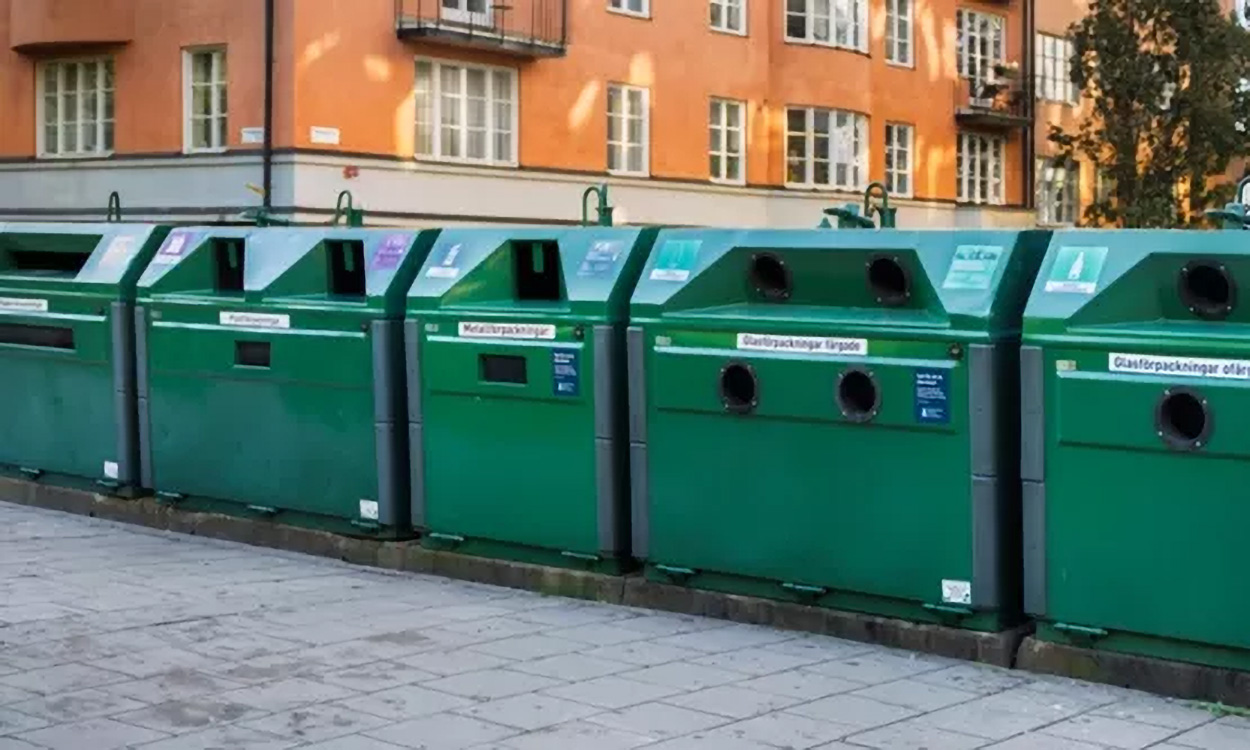
After China imposed an import ban on large volumes of waste in 2018, trade fell sharply. Yet, according to estimates Lomborg references, even during the years immediately after the ban, between 5 and 10 percent of the land-based plastic ending up in the world’s oceans may have come from material collected for recycling by wealthy countries. What was presented to households as an environmental contribution could, in the end, add to ocean pollution.
Optimal Recycling May Be Just Ten Percent
So how much should a society ideally recycle? Lomborg points to Japan, which he says has the world’s best statistics on municipal waste management.
A peer-reviewed study there has calculated the socially optimal recycling rate — the level at which the total benefits, including environmental gains, are highest in relation to costs. The result was just 10 percent. A later study found that the lowest total costs of municipal waste management occurred at a recycling rate of 7.6 percent.
That doesn’t mean all recycling above those levels is necessarily harmful. But, according to Lomborg, the studies illustrate that there’s a threshold where additional recycling becomes ever more expensive while the benefits diminish.
If too little is recycled, simple gains from metals and certain plastics are lost. But as attempts are made to recycle more and more, society must devote ever larger resources to ever smaller improvements — until the overall effect becomes negative.
One Bin May Be Better Than Ten
Lomborg also highlights a widely cited U.S. analysis in which researchers examined how a suburban area could design its waste management from scratch. The researchers compared various combinations of recycling, landfilling, incineration, and biological treatment.
The best solution economically turned out to be much simpler for households than today’s extensive source sorting. All waste would be placed in a single bin and transported to a central facility.
There, machines would separate out recyclable materials and organic waste. The organic material could be used to produce biogas and soil improvers, while the rest would mostly be incinerated.
In the optimal model, roughly 12 percent went to material recycling, 38 percent to biological treatment, and half to incineration. According to the analysis, this produced the best combination of low costs and environmental benefits. Lomborg sums up the point:
“One trash bin instead of ten, with the optimal combination of low cost and environmental gain, achieved by machines rather than by lecturing households.”
Households’ Unpaid Labor Costs Billions
Lomborg notes that a cost almost always overlooked in official calculations is the time people spend sorting their waste themselves. Peer-reviewed studies from Sweden and Finland show that source separation takes between 26 and 29 minutes per person per week.
That may seem insignificant, but multiplied by hundreds of millions of people, the economic cost becomes enormous.
If the value of households’ time is set at half the minimum wage in each country, Lomborg calculates that this labor amounts to between 43 and 47 billion euros a year within the EU — about as much as the total cost of municipal waste management in all of Europe.
For all OECD countries, he estimates households’ sorting labor to be worth between $111 and $123 billion annually. These costs don’t appear in municipal budgets since households do the work for free — but that time could be used for other things and should be counted when assessing the true value of source sorting, Lomborg argues.
Less Symbolic Policy, More Environmental Benefit
Lomborg does not argue for abolishing recycling. On the contrary, he believes materials that can be recycled with clear economic and environmental benefits should be put to use.
What he opposes is the notion that every extra percentage point of recycling is automatically a step forward. Politicians, he says, should stop treating recycling targets as a goal in themselves and instead judge which actions truly provide the best environmental value for money. His concluding advice is as simple as it is provocative:
“Recycle what is worth recycling. Then throw away the assumption that more recycling is always better.”
Bjorn Lomborg is president of the think tank Copenhagen Consensus, a visiting fellow at Stanford University’s Hoover Institution, and author of books including “False Alarm” and “Best Things First”.